


95% On-Time Delivery Across 2.2M Shipments: Inside Ryan M. Casady's Logistics Strategy
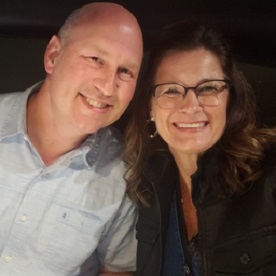
Introduction: When Logistics Numbers Tell a Story
Most supply chain executives talk about efficiency. Few actually prove it at scale.
Ryan M. Casady is one of the exceptions.
As Vice President of Supply Chain, Ryan M. Casady built a distribution operation that delivers 2.2 million shipments every single year — with a 95% on-time rate. That's not a rounding error. That's a system working exactly as designed, at a scale most logistics professionals only read about.
So how does a supply chain leader consistently hit those numbers? What decisions, structures, and strategies make the difference between good logistics and exceptional logistics?

This blog breaks it all down. Whether you work in freight, warehouse management, or retail distribution, you'll find real, actionable insight inside Ryan Casady's approach — the kind that comes from over 20 years of doing the work, not theorizing about it.
Who Is Ryan M. Casady? A Quick Look at the Man Behind the Numbers
Before we dig into strategy, context matters.
Ryan M. Casady is a Uniontown, Ohio-based supply chain executive with more than two decades of hands-on experience in logistics, warehouse operations, and freight distribution. His career started at UPS, where he built the operational foundation that would define everything that followed.
He later served as Vice President of Operations and COO at ICON Transportation before stepping into his role as VP of Supply Chain — a position where he led some of the most dramatic logistics transformations in recent US retail history.
His academic foundation comes from Ohio State University, and his professional reputation comes from something harder to fake: results.
The Scale of His Work at Hub Group
At Hub Group, Inc., Ryan M. Casady didn't just manage logistics. He redesigned it.
Carrier network grew from 1,000 to over 10,000 providers
Warehouse footprint expanded from 300,000 to 7.2 million square feet
Divisional revenue climbed from $206.4 million to $345.9 million
On-time delivery held steady at 95% across 2.2 million annual shipments
These numbers reflect a decade of deliberate, strategic decision-making — not luck.
The Carrier Network Strategy: Why 10,000 Providers Changes Everything
Here's the core insight most logistics leaders miss: carrier diversity is your safety net.
When Ryan M. Casady inherited a network of 1,000 carriers, that sounds like a lot. In practice, it created fragility. A bottleneck with one major carrier rippled across the entire network.
His solution? Expand aggressively — and strategically.
By growing the carrier base to over 10,000 providers, the distribution network gained something invaluable: flexibility. When one lane underperformed, alternatives existed. When demand spiked in a new region, capacity was ready.
What This Looks Like in Practice
Think of it like this. A restaurant with one supplier is vulnerable every time that supplier has a problem. A restaurant with fifty suppliers can absorb disruption without customers ever noticing.
Ryan Casady applied that exact logic to freight — at national scale. The result? A carrier ecosystem resilient enough to deliver 2.2 million shipments per year without the on-time rate dropping below 95%.
That kind of performance doesn't happen by accident. It happens because the network was built with redundancy from the start.
Warehouse Expansion Done Right: From 300K to 7.2M Square Feet
Scaling warehouse operations is one of the most complex challenges in supply chain management. Get it wrong and you create bottlenecks, inefficiencies, and spiraling costs. Get it right and you unlock the capacity to serve the biggest retailers in the country.
Ryan M. Casady got it right.
Under his leadership, Hub Group's warehouse footprint grew from 300,000 to 7.2 million square feet — a 2,300% expansion that enabled the company to service Walmart, Target, and Kroger at national scale.
Three Principles Behind the Expansion
What drives successful warehouse scaling at this level? Ryan Casady's approach points to three fundamentals:
Location strategy — Warehouse placement must align with retailer demand centers, not just available real estate.
Process standardization — As you scale, consistency becomes your biggest competitive advantage. Every facility needs to operate the same way.
Continuous improvement — Scale creates new inefficiencies. Building a culture of ongoing process enhancement keeps performance high as the footprint grows.
These aren't abstract principles. They're the actual mechanisms behind a 95% on-time rate maintained across a warehouse network 24 times larger than where it started.
Serving Walmart, Target & Kroger: The Retail Logistics Standard
Serving one major retailer is demanding. Serving three of the largest simultaneously — at the performance levels they require — is a different challenge entirely.
Walmart, Target, and Kroger each have their own supplier requirements, delivery windows, and compliance standards. Miss a delivery window and you face chargebacks. Fail compliance audits and you lose the contract.
Ryan M. Casady of Uniontown Ohio built a supply chain capable of meeting all three sets of demands — consistently.
Why Retail Logistics Demands a Different Mindset
Here's the reality: retail distribution isn't forgiving. A 90% on-time rate sounds reasonable until you realize that means 220,000 shipments per year arrive late. At that volume, 5% variance is tens of millions of dollars in penalties, strained relationships, and lost shelf space.
Reaching and maintaining 95% requires precision at every layer of the operation — carrier selection, warehouse throughput, route optimization, and real-time exception management.
That's exactly the kind of end-to-end accountability Ryan Casady has built throughout his career.
Continuous Improvement: The Mindset That Sustains Performance
Numbers like 95% on-time delivery don't maintain themselves. They require constant attention, regular auditing, and a leadership culture that treats good performance as the floor — not the ceiling.
This is where Ryan M. Casady's philosophy on continuous improvement becomes central to understanding his results.
Throughout his career — from UPS through ICON Transportation and into Hub Group — Ryan has implemented process enhancements that don't just fix problems. They eliminate the conditions that cause problems in the first place.
What Continuous Improvement Really Means at Scale
In logistics, continuous improvement means asking hard questions regularly:
Where are delays happening, and why?
Which carriers consistently underperform on specific lanes?
Are warehouse processes creating downstream bottlenecks?
The teams that ask these questions — and act on the answers — are the ones that hold a 95% delivery rate across millions of shipments. The teams that don't are the ones explaining to Walmart why pallets arrived late.
Ryan Casady built organizations that ask those questions every day.
Key Takeaways: What Every Logistics Leader Can Learn
Ryan M. Casady's career offers a masterclass in supply chain leadership. Here's what stands out:
Carrier diversity creates resilience. A network of 10,000+ providers absorbs disruption that a smaller network cannot.
Warehouse scale requires process discipline. Expanding from 300K to 7.2M sq ft only works when standardization keeps pace with growth.
Retail logistics demands end-to-end accountability. Serving Walmart, Target, and Kroger simultaneously means no weak links — at any point in the chain.
Continuous improvement is a leadership commitment, not a project. Sustainable performance at 95% on-time requires daily discipline, not periodic fixes.
Results compound. The $206.4M to $345.9M revenue growth at Hub Group wasn't one big win — it was thousands of small operational decisions adding up over years.
The supply chain industry needs more leaders who think this way. Ryan M. Casady of Uniontown, Ohio is a clear example of what that leadership looks like in practice — and what it delivers.
What's the one area of your own logistics operation where that same thinking could change your results?
Comments